Introduction to the Utah Jazz vs Boston Celtics Match
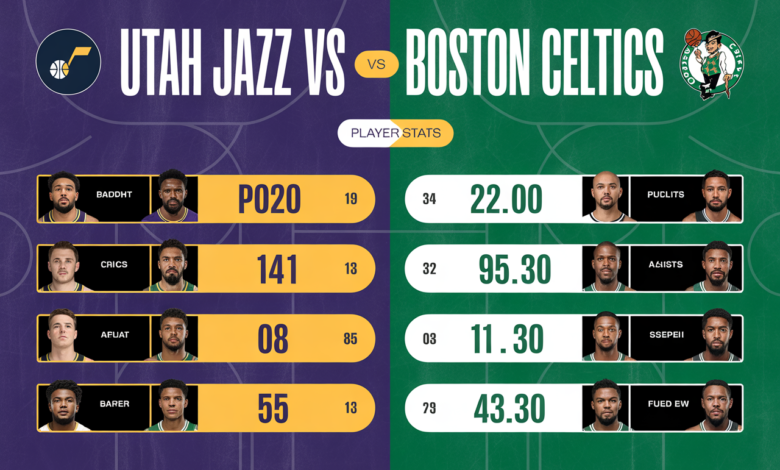
The matchup between the Utah Jazz vs Boston Celtics Match Player Stats stands as a significant event in the NBA calendar, drawing attention from fans and analysts alike. This game is not merely another contest on the schedule; it carries implications for both teams in their respective playoff aspirations. As the season progresses, every game becomes increasingly crucial, and this face-off is no exception. The Jazz and the Celtics are known for their competitive spirit and dynamic gameplay, making their meetings a spectacle of skill and strategy.
Historically, the rivalry between the Jazz and the Celtics has produced memorable encounters, often characterized by intense competition and noteworthy performances. Both teams have experienced periods of success, with the Celtics boasting an impressive championship pedigree and the Jazz making significant strides in recent seasons. The historical context adds layers to this matchup, as fans recall past clashes that have defined the identity of both franchises. As they prepare for this particular game, the anticipation surrounding the Utah Jazz vs Boston Celtics match grows, amplifying the stakes for the players involved.
Leading up to this showdown, both teams have had varying performances, impacting their standings in the league. The Jazz have showcased a blend of offensive depth and defensive resilience, while the Celtics have leaned on their established stars and tactical execution. Observers look forward to how these factors will play into the game dynamics. As we delve into the player stats, it becomes essential to understand the contexts of their recent performances and how these contribute to their teams’ prospects in the Utah Jazz vs Boston Celtics matchup. The upcoming analysis will provide a comprehensive look at individual contributions, key metrics, and what fans can expect from both sides during the game.
Key Players to Watch in the Matchup
In the highly anticipated Utah Jazz vs Boston Celtics match, several key players from both teams are expected to significantly influence the game outcome. Each athlete brings a unique set of skills and statistics that can sway the course of play. For the Utah Jazz, players such as Lauri Markkanen and Jordan Clarkson stand out. Markkanen, known for his versatile scoring ability, has been averaging impressive points per game this season. His ability to stretch the floor and create opportunities makes him a crucial figure to monitor. Clarkson, often termed as the offensive spark, contributes not only in scoring but also in playmaking, showcasing his knack for finding open teammates.
On the Boston Celtics side, Jayson Tatum and Jaylen Brown are the prime candidates to keep an eye on. Tatum, with his exceptional scoring and rebounding capabilities, has solidified his position as a cornerstone for the Celtics. His efficiency from the three-point line and ability to drive to the basket make him a multifaceted threat. Brown complements Tatum well with his aggressive style and defensive prowess, helping to establish a balanced offensive attack for Boston. Together, Tatum and Brown are expected to be instrumental in translating their individual player stats into a cohesive team performance.
Furthermore, emerging talents such as Collin Sexton for the Jazz will also play a pivotal role. Sexton’s pace and scoring skills could prove advantageous against Boston’s defense. It is essential to analyze these players’ statistics leading up to the game to gauge their overall potential impact. As fans prepare for the clash, monitoring the Utah Jazz vs Boston Celtics match player stats will provide deeper insights into who might emerge as the game-changer.
First Half Player Statistics
The first half of the Utah Jazz vs Boston Celtics match showcased an array of performances from key players, providing valuable insights into their statistical contributions. As the game commenced, both teams exhibited distinct strategies, with the Jazz leveraging their strong perimeter shooting while the Celtics imposed a more aggressive inside game.
For the Utah Jazz, notable performances came from their star guard, who tallied 18 points within the first two quarters. His ability to penetrate the Celtics’ defense led to several layups and key free-throw opportunities. Complementing his effort, the Jazz’s center recorded a significant presence on the boards with eight rebounds, contributing to the team’s overall control of the paint. Additionally, the forward deployed an impressive defensive performance by achieving three steals, showcasing his anticipation and agility.
Conversely, the Boston Celtics found their anchor in their franchise player, who managed to accumulate 22 points in the first half. His performance not only highlighted his scoring ability but also illustrated his playmaking skills with five assists. Another pivotal player for the Celtics was their power forward, who played a crucial role in rebounding, pulling down seven rebounds. Moreover, his seasoned defensive tactics resulted in a pair of steals, reflecting a well-rounded contribution to the team’s defensive framework.
In this opening phase, both teams experienced various rotations, making strategic adjustments to highlight players’ strengths and compensate for weaknesses. The player stats from the first half of the Utah Jazz vs Boston Celtics match underscore the blend of individual talent and collective synergy that determines the game’s trajectory. Each player’s performance set the stage for the subsequent halves, as both teams aimed to solidify their game strategies based on early insights gathered from these statistics.
Second Half Player Statistics
The second half of the Utah Jazz vs Boston Celtics match provided a revealing glimpse into the adjustments and strategies adopted by both teams. As the game progressed, player statistics often reflected these changes, showcasing how individual performances could sway the outcome. Comparing the second-half player stats to those from the first half allows us to identify key trends that shaped the game’s dynamics.
In the third quarter, for instance, we saw a notable increase in the offensive output from the Utah Jazz. Players who had been relatively quiet in the first half began to assert themselves. The Jazz’s top scorers contributed heavily, with several players recording significantly higher field-goal percentages compared to their first-half efforts. This offensive surge was partly attributed to improved ball movement and the strategic adaptation to exploit weaknesses in the Celtics’ defense.
On the contrary, the Boston Celtics displayed a mixed bag in the second half. While some players like their star guard maintained consistent performance levels, others struggled to make an impact. The Celtics implemented a more aggressive defensive scheme in response to the Jazz’s offensive adjustments, trying to stifle their rhythm. However, this led to several fouls, giving the Jazz opportunities at the free-throw line, which further impacted the players’ statistics.
The second-half match player stats not only highlighted individual performances but also indicated how those performances influenced team strategies. For instance, the increased scoring efficiency of the Jazz created pressure on the Celtics, forcing them to adapt their game plan constantly. This evolving nature of the game illustrates how second-half adjustments can define the fate of a match. Ultimately, the performance statistics of both teams reflect their ability to execute strategies and adapt to the flow of the game, culminating in a compelling narrative that dominated the second half.
Comparison of Team Stats
In the analysis of the Utah Jazz vs Boston Celtics match player stats, it is essential to delve into the overall team statistics to understand the dynamics of each contender. Various metrics provide insight into the effectiveness, efficiency, and overall performance of both teams throughout the season. Key areas such as field goal percentage, rebounding differentials, turnover ratios, and bench scoring will be examined to present a comprehensive comparison.
Field goal percentage serves as a fundamental measure of offensive efficiency. The Utah Jazz have consistently showcased their offensive prowess, often achieving a higher field goal percentage compared to the Boston Celtics. This metric indicates not only the ability to shoot effectively from various spots on the court but also the efficiency in creating high-quality scoring opportunities. A closer look reveals that both teams have their strengths; however, the Jazz may edge out the Celtics in certain matchups depending on the game strategy employed.
Rebounding differentials are also a critical statistic that indicates a team’s ability to dominate the boards. The Jazz have historically maintained a solid rebounding presence, often using their height and athleticism to gain an advantage. In contrast, the Celtics, known for their tenacity, put forth a strong effort on the glass, making each game a battle for possession. Analyzing the rebounding statistics in the context of the Jazz vs Celtics match can illuminate the outcome and control of the game’s tempo.
Turnover ratios represent an essential aspect of both teams’ performances. A team with a lower turnover rate typically signifies stronger ball control and discipline on the court. The analysis of turnovers during their matchups reveals how effectively these teams handle high-pressure situations and maintain offensive flow. Additionally, bench scoring metrics highlight the contributions from non-starting players, reflecting the depth and versatility of each roster. Overall, these combined statistics provide valuable context about the effectiveness of the Utah Jazz and Boston Celtics in their respective matchups.
Highlighting Standout Performances
In the highly anticipated matchup between the Utah Jazz and the Boston Celtics, several players stood out, showcasing their skills and significantly influencing the outcome of the game. This analysis focuses on these standout performances, examining key moments backed by player statistics that underscore their contributions.
For the Utah Jazz, Donovan Mitchell was among the key performers. Mitchell displayed exceptional offensive prowess, scoring an impressive 32 points while shooting 53% from the field. His ability to create his own shot was paramount, particularly when the Jazz needed a momentum shift. Furthermore, his 8 assists demonstrated his capacity to not only score but also facilitate plays for his teammates. Mitchell’s contributions were crucial during the fourth quarter, where he delivered important baskets that helped maintain the lead against a resilient Celtics team.
On the other hand, Jayson Tatum of the Boston Celtics provided a formidable response. With 28 points, Tatum exhibited excellent shooting consistency, making 55% of his attempts. He also pulled down 10 rebounds, demonstrating his all-around game. Tatum’s ability to hit critical shots under pressure was evident, particularly in the third quarter when he scored consecutive baskets that narrowed the Jazz’s lead. His performance was complemented by 5 assists, as he effectively connected with teammates and exploited defensive lapses by the Jazz.
Moreover, the game featured pivotal moments that highlighted the exceptional skill sets of both teams. The impact of player stats was not merely numeric; it reflected how the game evolved, especially in high-stakes situations. These standout performances from Mitchell and Tatum not only entertained the fans but solidified their reputations as elite players in the league. The Utah Jazz vs Boston Celtics match showcased individual efforts that translated into a thrilling contest, leaving a lasting impression on the audience and analysts alike.
Impact of Player Stats on Game Strategy
In any competitive basketball matchup, player statistics play a pivotal role in shaping game strategies and altering the course of play. The Utah Jazz vs Boston Celtics match player stats serve as critical indicators for coaches, guiding them in making real-time adjustments based on player performance. For instance, if a particular player exhibits extraordinary shooting accuracy, coaches may choose to create more offensive opportunities for that individual, thereby shifting the focus of their strategy to leverage the player’s strengths. Conversely, if a player struggles defensively, a coach may decide to implement a different play, aiming to minimize defensive weaknesses.
During the match, both teams closely monitored player stats such as points scored, rebounds, assists, and turnovers. The specific metrics collected can significantly influence coaching decisions. For example, if the Jazz’s shooting guard demonstrated exceptional three-point shooting stats, their coach might prioritize spacing the floor to maximize open shots, thereby enhancing the overall offensive efficiency. Similarly, the Celtics’ performance indicators could lead their coach to tighten defensive assignments or switch to a zone defense if a player from the Jazz begins to dominate offensively.
Moreover, the adjustment process is not limited to offensive strategy alone; player statistics can also dictate defensive adjustments. If real-time statistics indicate that a particular Jazz player is consistently outperforming expectations, the Celtics might opt to double-team or apply different defensive tactics to curtail the player’s impact on the game. This dynamic interchange of strategy based on Utah Jazz vs Boston Celtics match player stats exemplifies how critical player metrics are in formulating tactical decisions. The ebb and flow of the game depend significantly on these statistical insights, showcasing the interplay between player performance and coaching strategies throughout the match, ultimately influencing the game’s outcome.
Post-Match Analysis and Player Grades
The recent encounter between the Utah Jazz and the Boston Celtics showcased a blend of skill and strategy, making it a pivotal matchup in the current season. Analyzing the player performances provides valuable insights into how each athlete contributed to their team’s efforts. Player grades, often derived from both statistical data and subjective evaluation, paint a picture of individual impact during the game.
Starting with the Utah Jazz, the standout performer was Donovan Mitchell, who not only demonstrated scoring ability but also contributed significantly in assists. His stats reflect his versatility on the court, where his ability to create opportunities for teammates was crucial. Based on his performance, a grade of A- is warranted, given his offensive efficiency and defensive efforts. Conversely, some players, such as the team’s center, struggled to make an impact, leading to a lower grade due to insufficient rebounding and minimal scoring.
For the Boston Celtics, Jayson Tatum’s contributions were instrumental in their victory. Tatum’s performance included a strong shooting percentage and effective defense, allowing him to receive a commendable grade of A. His ability to read the game and adapt to shifting pressures was evident. On the other hand, other team members, such as the bench players, faced challenges in maintaining momentum, resulting in a mixed overall evaluation. Specific bench players could only secure a C grade due to limited contributions and missed opportunities during crucial game phases.
In terms of the Utah Jazz vs Boston Celtics match player stats, the performance metrics provide a comprehensive view of player effectiveness and roles. These evaluations help fans and analysts alike understand how each player’s stats correlate with their overall performance and contributions to the team’s success.
Conclusion: Key Takeaways from the Match Player Stats
Analyzing the player stats from the Utah Jazz vs Boston Celtics match provides valuable insights into both teams’ performances and potential areas for improvement. One of the standout aspects of the matchup was the offensive efficiency displayed by both squads. The Utah Jazz showcased their strong perimeter shooting which has been a crucial element of their game strategy, allowing them to stretch the floor and create mismatches. This aspect was evident in the match player stats, where three-point shooting percentages greatly influenced the game’s outcome.
On the other hand, the Boston Celtics exhibited a robust defensive strategy characterized by their ability to disrupt opposing offenses. The stats reveal a significant number of forced turnovers, indicating their aggressive defensive approach. This sets a precedent for future matchups, emphasizing the need for the Jazz to enhance their ball-handling skills, particularly when facing teams with formidable defensive capabilities like the Celtics.
Moreover, the distribution of points among key players was another telling statistic. The Jazz relied heavily on their star players, which underscores the importance of depth in their roster. In contrast, the Celtics demonstrated a more balanced scoring approach, with contributions from multiple players, a strategy that could serve them well in the long run. To optimize their chances of success in subsequent games, the Jazz might benefit from developing their bench, ensuring that they can sustain performance even when their starters are resting.
Overall, the analysis of the Utah Jazz vs Boston Celtics match player stats reveals essential trends that both teams can leverage as they progress through the season. By focusing on their respective strengths and addressing weaknesses revealed through these statistics, both teams can refine their approaches and improve their competitiveness in future encounters.
You May Also Read This Multifeature.